(1).png)
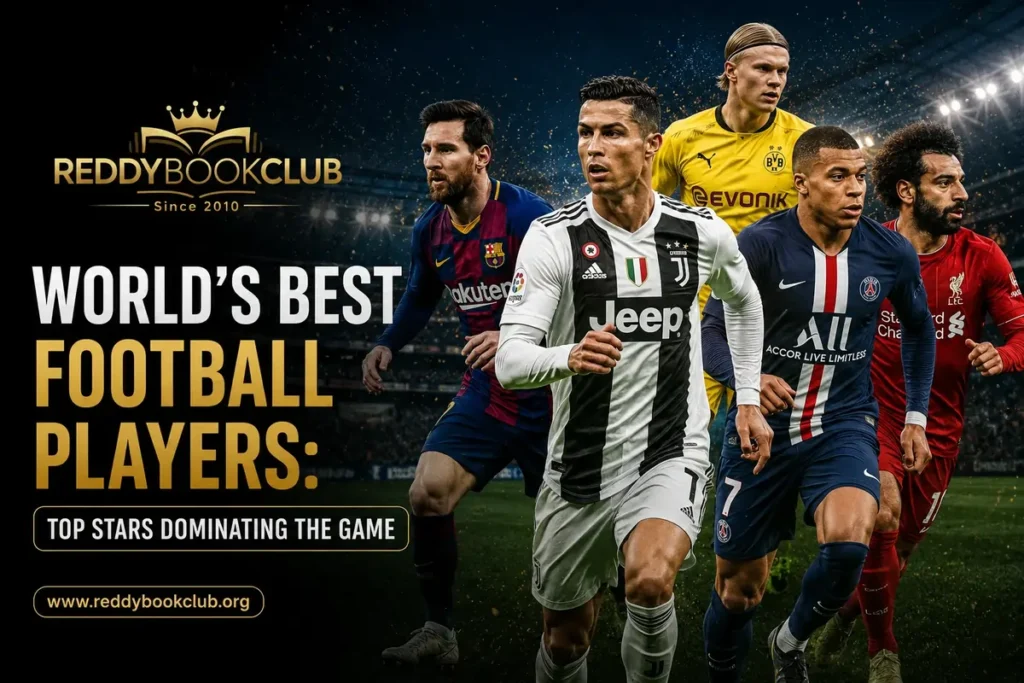
Some supporters value goals above everything else. Others prefer players who control matches, create chances, defend under pressure or perform when the biggest trophies are at stake. Comparing a striker with a midfielder, winger, defender or goalkeeper also creates an obvious challenge because every position demands something different.
Lionel Messi and Cristiano Ronaldo established extraordinary standards across more than a decade. Today, football has entered another fascinating period. Kylian Mbappé and Erling Haaland are chasing major scoring records, while players such as Jude Bellingham, Vinícius Júnior, Rodri and Lamine Yamal are influencing matches in their own distinctive ways.
The following selection is not presented as an official ranking. Instead, it highlights the footballers who belong in the modern conversation because of their ability, consistency, achievements and influence.
What Makes a Football Player Truly Great?
Judging greatness requires more than checking the goals column. A complete assessment should consider several areas.
Technical Ability
Ball control, passing accuracy, dribbling, shooting and decision-making reveal how comfortably a player handles difficult match situations. Reddy Book Club Elite players perform these actions quickly, even when surrounded by opponents.
Consistency
One excellent tournament can create attention, but long-term excellence creates a reputation. The finest players regularly perform across domestic leagues, continental competitions and international football.
Big-Match Influence
Important players often produce their best moments when the pressure is highest. Finals, knockout games, title races and international tournaments can transform a successful career into a legendary one.
Team Contribution
Football is not an individual sport. Goals matter, but so do assists, defensive work, movement, pressing, leadership and tactical discipline.
Career Achievements
Major trophies and individual awards help measure success. France Football’s winners list, for example, shows Lionel Messi winning the 2023 Ballon d’Or, Rodri taking the award in 2024 and Ousmane Dembélé becoming the 2025 winner.
15 Best Football Players in the Modern Era
1. Kylian Mbappé – Speed with a Ruthless Finish
Kylian Mbappé combines explosive acceleration with calm finishing. Defenders may understand that he wants to attack the space behind them, yet preventing him from doing it remains extremely difficult.
His danger does not come from pace alone. Mbappé can finish with either power or placement, move across the front line and create opportunities from wide positions. He is also comfortable carrying the responsibility of being the main attacking figure.
His European record already places him among the competition’s leading scorers. UEFA reported that Mbappé finished the 2025/26 Champions League season as top scorer with 15 goals and had reached 70 goals in 98 competition appearances.
2. Erling Haaland – Football’s Most Direct Goal Threat
Erling Haaland plays with a clear purpose: reach the scoring area and punish the defence. His size, pace and strength create obvious physical advantages, but his movement is equally important.
He watches defenders carefully, delays his run and then attacks the space at exactly the right moment. Inside the penalty box, he usually needs very little time to finish.
Haaland reached 50 Champions League goals in only 49 matches, becoming the fastest player to reach that landmark. His ability to maintain such a scoring rate has made him one of the leading candidates to dominate the next era of European football.
3. Ousmane Dembélé – An Unpredictable Attacking Force
Ousmane Dembélé can change direction, use either foot and attack from several positions. That unpredictability makes him difficult to defend because opponents cannot easily force him onto a weaker side.
His game includes more than individual dribbling. He can create space for teammates, combine in tight areas and accelerate attacks before a defensive shape becomes organised.
Winning the 2025 Ballon d’Or confirmed his rise from a highly talented winger into one of football’s most recognised performers.
4. Rodri – The Player Who Controls the Centre
Rodri represents a different form of greatness. He does not depend on spectacular dribbles or constant goal-scoring. Instead, he controls space, protects the defence and decides how quickly his team should move the ball.
His passing helps teams escape pressure and build attacks. Without possession, his positioning allows him to stop counterattacks before they become dangerous.
The midfielder’s influence was recognised when he won the 2024 Ballon d’Or. That achievement also demonstrated that players can receive football’s biggest individual honours without being traditional forwards.
5. Jude Bellingham – A Midfielder Built for Every Phase
Jude Bellingham can defend, carry the ball, create chances and arrive in scoring positions. That broad skill set gives coaches several ways to use him.
He can operate deeper in midfield, move between defensive lines or support the main striker. His physical confidence allows him to compete in intense matches, while his technical quality helps him stay composed in crowded areas.
What makes Bellingham particularly exciting is his willingness to take responsibility. He rarely appears overwhelmed by a major occasion and often plays with the authority of someone far more experienced.
6. Vinícius Júnior – The Winger Defenders Cannot Ignore
Vinícius Júnior brings speed, close control and aggression to the left side of an attack. When isolated against one defender, he can go outside, cut towards goal or combine with an overlapping teammate.
His presence can alter the entire defensive structure. Opponents may send additional cover towards his wing, creating space elsewhere for midfielders and forwards.
His development as a finisher has made him more complete. He is no longer only a player who creates excitement through dribbling; he is also capable of deciding major matches.
7. Mohamed Salah – The Standard for Modern Wingers
Mohamed Salah has helped redefine the role of a wide forward. He frequently begins on the right but moves into central areas where he can shoot, combine or attack the space behind the defence.
His movement is remarkably efficient. Salah does not need to touch the ball constantly to influence a game. A quick diagonal run can remove a defender and open an attacking route for a teammate.
His long-term consistency is a major part of his reputation. Maintaining elite output across several demanding seasons requires fitness, intelligence and an ability to adapt as opponents change their approach.
8. Harry Kane – More Than a Penalty-Box Striker
Harry Kane is an outstanding finisher, but describing him only as a scorer overlooks much of his game.
He can move away from the penalty area, receive possession and pass through defensive lines. When Kane drops deeper, runners can attack the space he leaves behind. This gives his team another creative option without removing his scoring threat.
His balance of finishing and playmaking makes him one of football’s most complete centre-forwards. UEFA statistics also place him among the fastest players to reach major Champions League scoring landmarks.
9. Lamine Yamal – A New Generation Has Arrived
Lamine Yamal plays with the imagination expected from a street footballer and the tactical awareness required at the elite level.
He can receive the ball near the touchline, beat a defender and create an opening within seconds. His passing vision is especially impressive because he does not always choose the obvious option.
The most exciting part of his development is that his game is still expanding. As his strength, finishing and match experience improve, he has the potential to become one of the defining attackers of his generation.
10. Robert Lewandowski – The Art of Centre-Forward Play
Robert Lewandowski has built his reputation through positioning, technique and intelligent finishing.
He understands where a chance is likely to appear before the pass has been made. That anticipation helps him score from crosses, rebounds, cutbacks and quick combinations around the penalty area.
Lewandowski also protects the ball well with his back to goal. This enables midfielders and wingers to join attacks rather than leaving him isolated.
UEFA’s all-time records place him behind only Cristiano Ronaldo and Lionel Messi among the Champions League’s leading scorers, illustrating the scale of his European career.
11. Lautaro Martínez – Intensity from the First Minute
Lautaro Martínez combines determined pressing with sharp penalty-box movement. He can play as the main striker or work alongside another forward.
His aggressive approach makes defenders uncomfortable when they are trying to build from the back. Once possession changes, he quickly positions himself for a cross, through ball or second chance.
Lautaro’s value lies in the number of different jobs he performs. He can lead the press, link attacks and still remain a reliable scoring option.
12. Pedri – Calm Thinking in Crowded Midfields
Pedri’s game is based on awareness. Before receiving the ball, he usually knows where the pressure is coming from and where his next pass should go.
He does not always depend on strength or speed. Small touches, body movement and clever positioning allow him to escape opponents and maintain possession.
Players like Pedri are important because they give attacking teams control. They connect defence with attack and help prevent matches from becoming rushed or disorganised.
13. Virgil van Dijk – Authority at the Back
Attackers often receive most of the attention, but elite defenders are equally important.
Virgil van Dijk is known for his reading of danger, aerial strength and calmness in one-on-one situations. Rather than making unnecessary challenges, he frequently controls the attacker’s route and waits for the right moment to intervene.
His passing also supports the attacking structure. Accurate long balls can move a team from defence to attack before opponents have time to reorganise.
14. Lionel Messi – The Benchmark for Creative Greatness
Lionel Messi’s career changed the way supporters evaluate attacking players. He has combined elite dribbling, finishing and playmaking within the same game.
Messi can begin an attack in midfield and complete it inside the penalty area. His close control allows him to move through spaces that appear too small, while his passing can remove several defenders with one action.
His record includes eight Ballon d’Or awards and success at both club and international level. FIFA has also highlighted the remarkable length and trophy-winning scale of his career.
15. Cristiano Ronaldo – The Ultimate Example of Reinvention
Cristiano Ronaldo’s career demonstrates how an elite player can evolve.
He began as an explosive winger who used tricks and acceleration to beat defenders. Over time, he developed into a central goal scorer with exceptional movement, heading and finishing.
His dedication to physical preparation allowed him to remain productive across different leagues, tactical systems and stages of his career.
Ronaldo is recognised as the Champions League’s record scorer and appearance holder. His ability to perform for such a long period explains why he remains central to almost every discussion about football’s greatest players.
Messi, Ronaldo, Mbappé or Haaland: Who Is the Best?
The answer depends on what is being measured.
Messi offers the strongest combination of creativity, dribbling, scoring and career honours. Ronaldo represents longevity, athletic development and extraordinary goal production.
Mbappé is one of the most dangerous players in open space and has already established an exceptional European scoring record. Haaland is the most direct penalty-box threat and has reached Champions League milestones faster than previous scoring legends.
Selecting one name does not make the others less impressive. They belong to different stages of football history and offer different qualities.
Why Goals Alone Cannot Decide the Debate
Goals are the clearest statistic in football, but they cannot explain everything.
A defensive midfielder may control an entire match without scoring. A defender may stop several dangerous attacks before a shot is attempted. A goalkeeper may protect a lead with one decisive save.
Assists can also be misleading. A brilliant pass may not become an assist if the striker misses, while a simple sideways pass can be recorded as one when a teammate scores from distance.
Statistics should therefore support football analysis rather than replace it. Watching movement, decision-making and tactical influence provides a more complete picture.
The Next Face of World Football
Mbappé and Haaland currently appear best placed to lead football’s next major rivalry. Both are producing Champions League scoring numbers that compare favourably with the early records of established legends.
However, the future may not belong to only two players. Bellingham can dominate from midfield, Yamal possesses rare creative ability, and Vinícius can decide matches through direct attacking play.
Modern football is becoming increasingly specialised. The next globally dominant player may be a scorer, a creator or someone capable of doing several jobs at once.
Final Verdict
There is no permanent answer to the debate over the best football player in the world.
Lionel Messi and Cristiano Ronaldo remain the defining names of their era. Kylian Mbappé and Erling Haaland have the scoring ability to build similar global reputations. Rodri, Bellingham, Vinícius, Salah and other elite performers prove that greatness can take many forms.
The most reasonable approach is to judge players according to their role, consistency, achievements and influence on important matches. Personal preference will always remain part of the discussion—and that is exactly what keeps the debate interesting.
Frequently Asked Questions
Who is considered the best football player in the world?
There is no official permanent answer. Lionel Messi is frequently selected because of his individual awards, creative ability and team achievements. Mbappé, Haaland, Rodri and other modern stars also belong in the current discussion.
Who has won the most Ballon d’Or awards?
Lionel Messi holds the men’s record with eight Ballon d’Or victories, with his latest award coming in 2023.
Who is the Champions League’s leading goal scorer?
Cristiano Ronaldo holds the all-time Champions League scoring record, ahead of Lionel Messi and Robert Lewandowski.
Who is better: Mbappé or Haaland?
Mbappé contributes more frequently through wide attacking runs, dribbling and chance creation. Haaland is generally more focused on central movement and finishing. The better choice depends on the type of forward a team requires.
Which young football players could become future legends?
Lamine Yamal and Jude Bellingham are among the most prominent young players. Their technical quality, confidence and experience in major matches give them strong foundations for long careers.
How should the best football players be compared?
Players should be assessed through technical ability, consistency, trophies, individual awards, big-match performances, leadership and contribution to their specific position.